


Find gaps between .env, .env.example, shell variables, and Python code.
envgap is a diagnostic CLI for Python projects that use .env files, .env.example, shell variables, and os.environ / os.getenv in code. It does not load your config. It shows the gaps between what your app expects, what your project documents, and what your environment actually provides.
envgap detects Pydantic BaseSettings fields, aliases, and env prefixes for FastAPI-style projects.
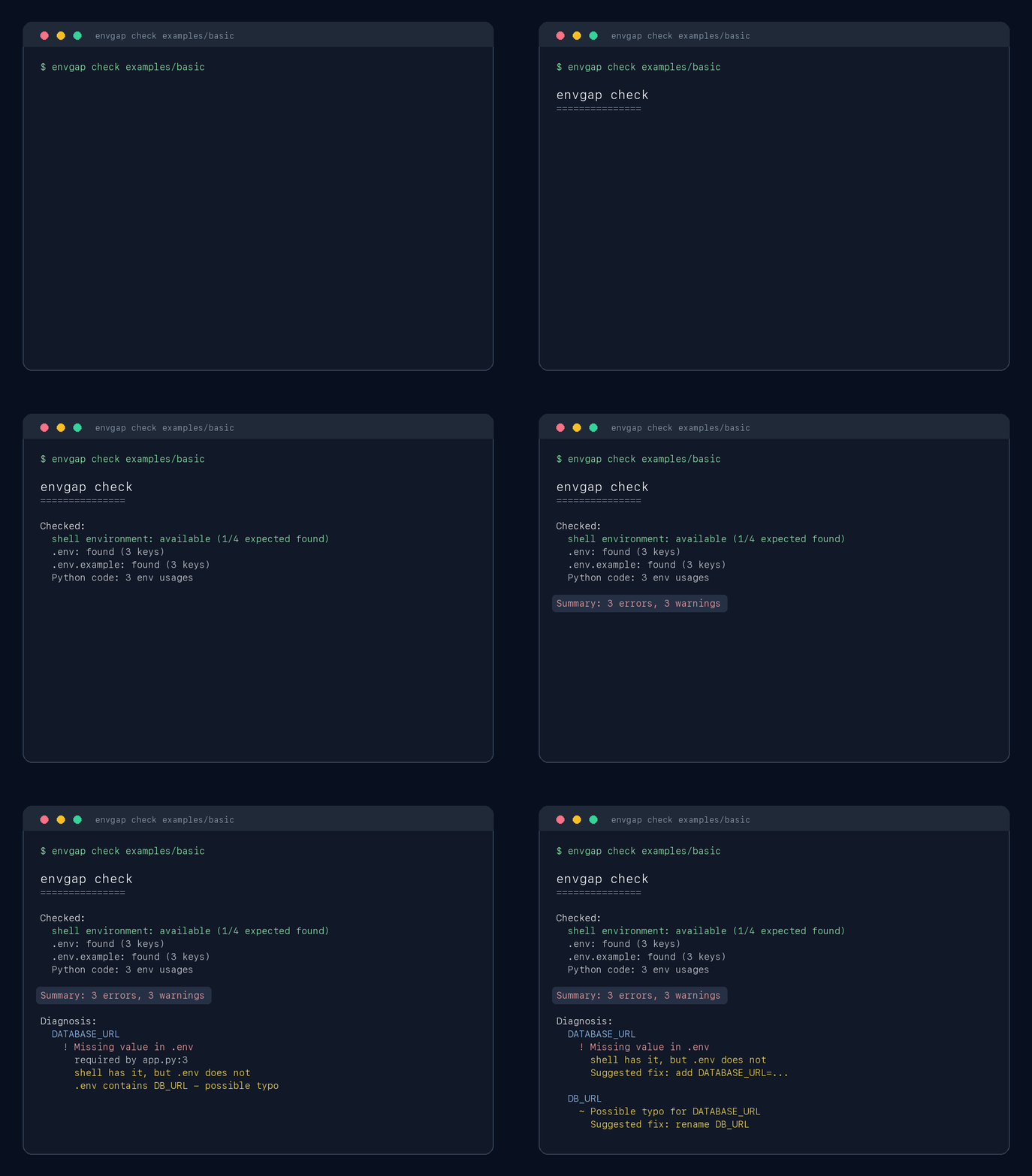
- Catch missing env vars before CI, Docker, or another developer's machine fails.
- Spot stale
.env.examplefiles that no longer match real code. - Find typo-shaped drift like
DB_URLvsDATABASE_URL. - Detect placeholder secrets such as
changeme,todo, andyour-key-here. - Add a lightweight config check to CI without adopting a new settings framework.
envgap is intentionally not a .env loader. It is the tool you run when you want the project to explain why config works in one place and breaks somewhere else.
- 30-Second Demo
- When It Helps
- Why
- Install
- Quick Start
- What It Checks Today
- Exit Codes
- CI
- Example Diagnosis
- Why Not Just python-dotenv?
- Current Scope
- Roadmap
- Contributing
- Development
Given a project with:
# .env
DB_URL=postgres://localhost/app
OPENAI_API_KEY=changeme
# app.py
import os
DATABASE_URL = os.environ["DATABASE_URL"]Run:
$ DATABASE_URL=postgres://shell/app envgap check examples/basic

envgap check
===============

Checked:
  shell environment: available (1/4 expected key(s) found)
  .env: found (3 key(s))
  .env.example: found (3 key(s))
  Python code: 3 env usage(s)

Diagnosis:
  DATABASE_URL
    ! Missing value: DATABASE_URL is missing from .env (app.py:3)
      It is present in your shell environment, so local commands may work while CI or Docker still fails.
      Suggested fix: Add DATABASE_URL=... to .env or document how CI/Docker should provide it.

  DB_URL
    ~ Possible typo: DB_URL may be a typo for DATABASE_URL (.env:1)
Suggested fix: Rename DB_URL to DATABASE_URL if they represent the same setting.Use envgap when a Python project has config spread across:
- local
.env - documented
.env.example - shell exports
- Python code
- CI or Docker conventions
It is especially useful for Python backend projects, FastAPI/Django/Flask apps, AI/data apps with API keys, and open-source projects where .env.example must stay useful for new contributors.
Environment config bugs are boring until they eat an afternoon.
Common examples:
- The app expects
DATABASE_URL, but.envcontainsDB_URL. .env.examplesays a key exists, but local.envnever got it.- A secret is still set to
changeme. - A variable works locally only because it is exported in your shell.
- CI, Docker, or another developer's machine fails because the real required variables are not documented.
envgap is for that moment when you want the project to explain itself.
pip install envgapFrom a local checkout:
pip install -e ".[dev]"Run a check in the current project:
envgap checkTry the included broken example:
envgap check examples/basicTry a FastAPI-style settings example:
envgap check examples/fastapiShow machine-readable output:
envgap check --jsonIgnore shell variables for deterministic CI checks:
envgap check --no-shellFail on warnings as well as errors:
envgap check --strict--ci is supported as a CI-friendly alias for --strict:
envgap check --ciUse custom dotenv filenames:
envgap check --env-file .env.local --example-file .env.exampleenvgap check currently inspects:
- current shell environment
.env.env.example- Python files using common environment variable APIs
- Pydantic
BaseSettingsfields used by FastAPI-style settings modules
It detects:
- missing keys
- undocumented extra keys
- duplicate keys
- empty values
- placeholder values like
your-key-here,changeme,todo, andreplace-me - likely typo pairs like
DB_URLvsDATABASE_URL - required env vars used in Python code but missing from
.env.example - required Pydantic settings fields missing from
.envor.env.example - missing
.env - missing
.env.example
It scans Python code for:
os.environ["DATABASE_URL"]
os.getenv("DATABASE_URL")
os.getenv("DATABASE_URL", "sqlite:///local.db")
os.environ.get("DATABASE_URL", "sqlite:///local.db")
It also scans Pydantic Settings classes:
from pydantic_settings import BaseSettings

class Settings(BaseSettings):
    database_url: str
    openai_api_key: str
    debug: bool = False
Required vs optional behavior:
os.environ["KEY"]is requiredos.getenv("KEY")is requiredos.getenv("KEY", default)is optionalos.environ.get("KEY", default)is optionalBaseSettingsfields without defaults are requiredBaseSettingsfields with defaults are optionalField(alias=...)andField(validation_alias=...)use the configured env name- simple
env_prefixsettings are applied to field names
| Command | Exit code behavior |
|---|---|
envgap check |
exits 1 when errors are present |
envgap check --strict |
exits 1 when errors or warnings are present |
envgap check --ci |
same as --strict |
envgap check --json |
same pass/fail behavior, JSON output |
envgap check --no-shell |
ignores current shell variables when diagnosing missing keys |
Warnings do not fail a normal check unless --strict or --ci is used.
name: envgap

on: [push, pull_request]

jobs:
  envgap:
    runs-on: ubuntu-latest
    steps:
      - uses: actions/checkout@v4
      - uses: actions/setup-python@v5
        with:
          python-version: "3.12"
      - run: pip install envgap
- run: envgap check --ciGiven:
# .env
DB_URL=postgres://localhost/app
OPENAI_API_KEY=changeme
# .env.example
DATABASE_URL=
OPENAI_API_KEY=your-key-here# app.py
import os
DATABASE_URL = os.environ["DATABASE_URL"]
DEBUG = os.getenv("DEBUG", "false")envgap can report:
DATABASE_URLis required in code but missing from.envDB_URLmay be a typo forDATABASE_URLOPENAI_API_KEYstill looks like a placeholderDEBUGis optional because it has a default
python-dotenv loads environment variables.
envgap explains whether the environment variables your app expects match the variables your project defines and documents.
The useful question is not only:
Did
.envload?
It is:
What does my app expect, where should it come from, and why is it missing or wrong here?
| Tool | Purpose | How envgap differs |
|---|---|---|
| python-dotenv | Loads .env files |
envgap diagnoses drift between code, .env, .env.example, and shell variables. |
| pydantic-settings | Validates application settings | envgap diagnoses configuration drift instead of validating settings. |
| django-environ | Reads environment configuration for Django | envgap is framework-independent and diagnoses configuration drift. |
| Secret scanners | Detect leaked secrets | envgap finds missing or inconsistent configuration rather than exposed secrets. |
This is intentionally a small diagnostic tool, not a config framework.
In scope now:
.env.env.example- shell environment
- Python
os.environ/os.getenvscanning - Pydantic
BaseSettingsfield, alias, and env prefix detection - terminal and JSON reports
- CI-friendly exit codes
Not in scope yet:
- loading or mutating your environment
- validating every framework-specific settings edge case
- Docker Compose parsing
- GitHub Actions secrets parsing
- dynamic Pydantic settings config and nested settings
- dynamic Pydantic settings config and nested settings
- Django settings helper detection
- Docker Compose env detection
- GitHub Actions env/secrets detection
- precedence explanations for shell vs
.envvs framework defaults - GitHub Actions annotations
- richer JSON schema for editor and CI integrations
See the full roadmap.
Real-world config examples are the most useful contribution right now.
New contributors can start with good first issues, help wanted issues, or false positives from their own Python projects.
Good first contributions:
- report a false positive with a tiny redacted example
- add a missing framework pattern
- improve docs for CI, FastAPI, Django, or Docker users
- add tests for typo detection edge cases
See CONTRIBUTING.md and SUPPORT.md.
python -m venv .venv
. .venv/bin/activate
pip install -e ".[dev]"
pytest
Run the example locally:
envgap check examples/basicRun the FastAPI-style example:
envgap check examples/fastapiRun the shell-aware example:
DATABASE_URL=postgres://shell/app envgap check examples/basicMIT